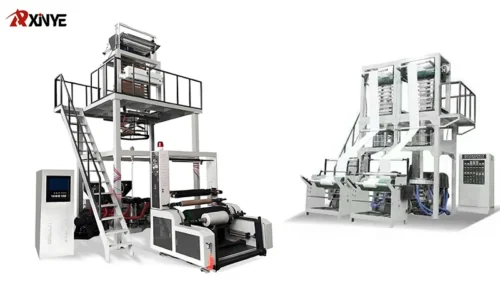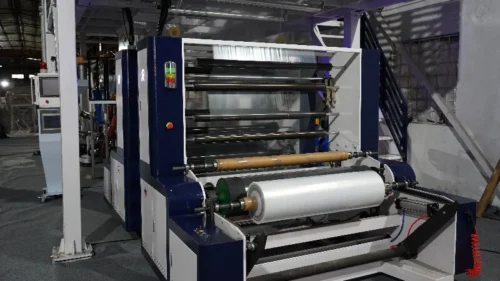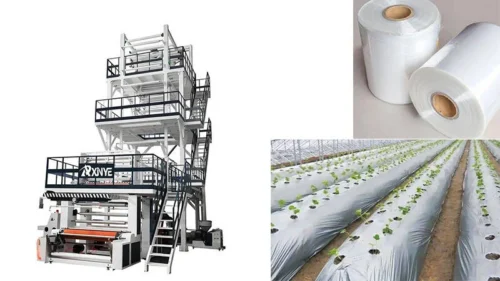
Blown film machines are essential equipment in the global packaging industry. Understanding the materials they process helps buyers select reliable manufacturers, ensuring long-term, stable film production.
Blown film production lines can process a wide range of thermoplastic polymers; the specific material chosen depends on the desired film structure, performance requirements, and intended application. The choice of raw material directly influences the film’s strength, transparency, sealing properties, and production efficiency.
Common materials include PE (polyethylene), PP (polypropylene), and PVC (polyvinyl chloride). This article focuses on these three materials to explore the raw materials used in blown film machines and the applications of the films produced from them.
PE (Polyethylene): The Most Versatile Base Material
PE is, by far, the most widely used raw material in blown film processing. It is the primary material for many everyday items, such as shopping bags, plastic wrap, and protective packaging for express shipments.

PE can be further categorized based on its density:
- Low-Density Polyethylene (LDPE): Soft to the touch with excellent ductility, it produces highly transparent films—the preferred choice for general packaging films and plastic wrap.
- Linear Low-Density Polyethylene (LLDPE): Offers superior toughness and puncture resistance, making it ideal for heavy-duty applications like trash bags and courier bags.
- High-Density Polyethylene (HDPE): Characterized by high rigidity and structural stiffness, it produces films with a more matte appearance; it is commonly used for shopping bags and packaging for heavy items.
For general-purpose film products, PE is the top choice—it features a mature production process, manageable costs, and is compatible with the vast majority of standard blown film machines.
PP (Polypropylene): A High-Transparency, Heat-Resistant Material
If your products require high heat resistance and exceptional transparency—such as food storage bags or films designed for microwave heating—PP is the most suitable raw material.
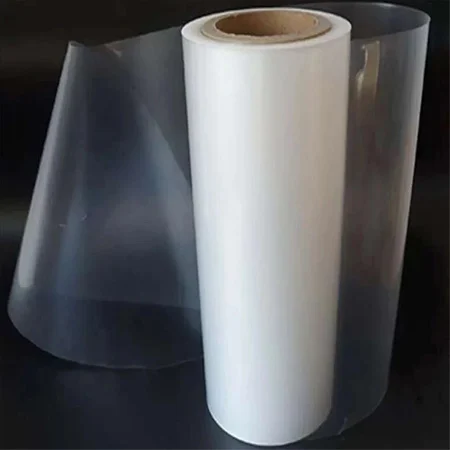
Films produced from PP offer higher transparency than those made from PE, with virtually no haze. They can withstand temperatures exceeding 100°C without deforming and provide superior resistance to oils and fats, preventing seepage when in contact with oily food products. It is worth noting that blown films often exhibit poor cold resistance, becoming brittle at low temperatures; therefore, they are generally unsuitable for packaging applications intended for frozen or low-temperature environments.
Many food packaging manufacturers now utilize a blend of PP (polypropylene) and PE (polyethylene) for film blowing. This combination balances transparency with toughness, making the film suitable for a wider range of applications.
PVC (Polyvinyl Chloride): The Preferred Choice for Functional Films
PVC is primarily used to produce specialized functional films, most commonly for industrial packaging, electrical wire insulation, and agricultural mulch films.
The key advantage of PVC lies in its exceptional plasticity. By adjusting the proportion of plasticizers, it can be formulated into soft stretch films and cling wraps, or into more rigid decorative and protective films. Furthermore, PVC offers strong resistance to acid and alkali corrosion and is more cost-effective than PE or PP. However, it should be noted that standard PVC is not heat-resistant. Additionally, some PVC products containing plasticizers are not suitable for direct contact with food; therefore, it is essential to ensure that any material selected for food-related applications complies with relevant food-contact safety standards.
Beyond these base materials, modern film-blowing processes often incorporate various functional masterbatches—essentially providing a “custom upgrade” to the film.
Common examples include filler masterbatches, which reduce raw material costs while enhancing the film’s stiffness; color masterbatches, which allow for the production of films in any desired color; anti-aging masterbatches for agricultural films to extend their service life; and antibacterial or antistatic masterbatches for food packaging to meet specific performance requirements.
Two-Layer PP/PE Film Blowing Machine
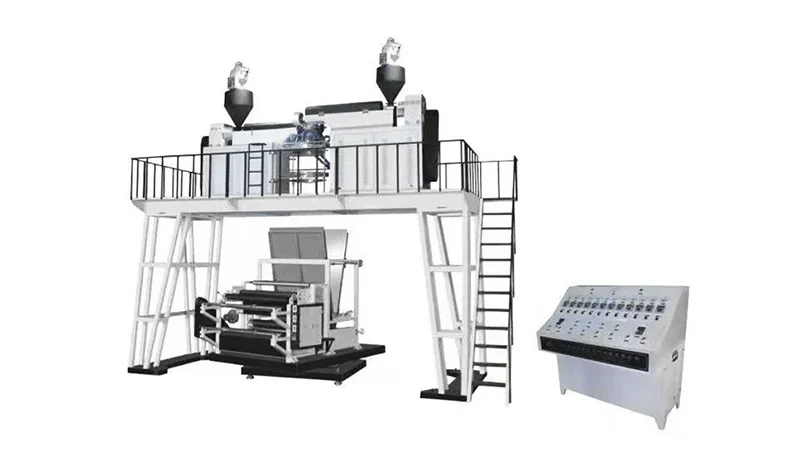
Xinye’s two-layer PP/PE film blowing machine features a dual-extruder and dual-layer die head design, equipped with a downward-blown, water-cooled system. The primary advantage of this equipment lies in its dual-extruder and dual-layer die configuration, which allows for the use of raw materials with distinct properties in each layer. The resulting PP/PE composite film combines the wear resistance, transparency, and dimensional stability (resistance to stretching) of PP with the excellent heat-sealing characteristics of PE.
Please feel free to contact us if you have any requirements; Xinye is here to provide you with high-quality film blowing machines.