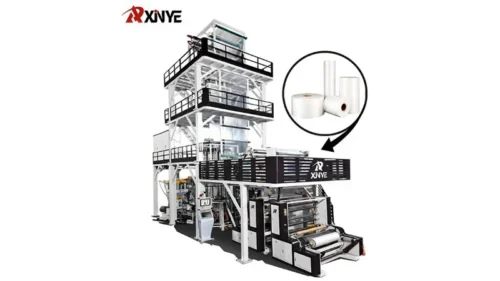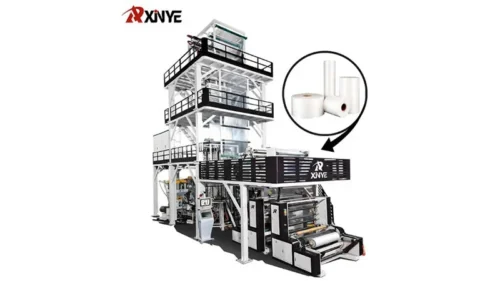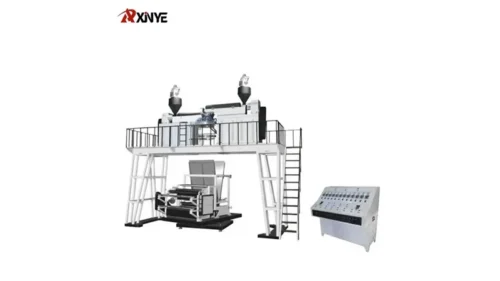
Everyone is familiar with blowing soap bubbles; if you replace the soapy water with polymer and compress the continuously inflated bubble into an ultra-thin film, you have discovered the secret behind the blown film machine.
Of course, the actual production workflow of a blown film machine is far more complex. The entire process—from startup preparation to the winding of the finished product—is standardized, with specific parameter controls required at every stage. Let’s take a look at how the blown film machine ensures high-quality film formation.
Pre-startup Preparation
Proper preparation is essential before operating the blown film machine.
Clear away any unrelated debris from around the equipment, inspect the status of electrical switches and drive components, ensure the hopper is free of foreign objects, and connect the safety ground wire.
Set the heating temperatures for each zone based on the raw material type: 160–180°C for LDPE/LLDPE and 210–230°C for HDPE. Once all heating zones reach the set temperature, maintain the heat for at least 20 minutes to ensure uniform and stable temperatures across the barrel and die head.
Raw Material Pre-treatment and Extrusion Plasticization
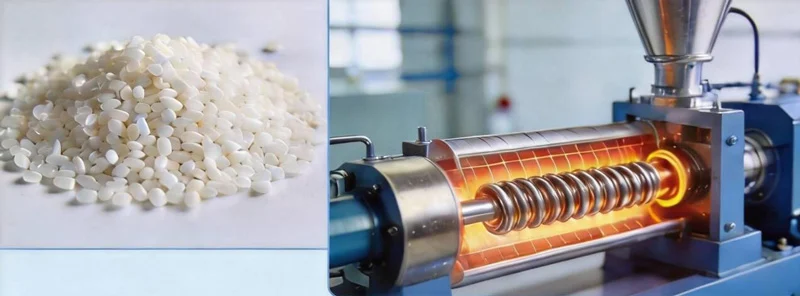
Ensure the plastic pellets are dry. Keep the moisture content of the pellets below 0.1% to prevent bubble defects in the finished film. Next, start the screw at a low speed; the plastic pellets gradually melt inside the barrel through a combination of frictional heat and external heating.
After receiving the molten plastic, the die head filters out impurities. The “clean” molten plastic is then extruded through an annular die opening, forming a tubular film parison of uniform thickness. During this process, the molten polymer transitions from a liquid to a solid state. Note that the die gap is typically set between 0.8 mm and 1.5 mm.
Inflation Molding and Cooling/Setting
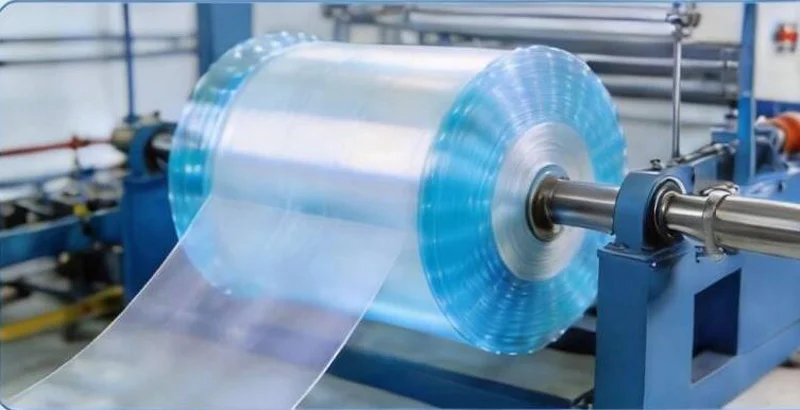
Compressed Air Inflation: Compressed air at 0.2–0.3 MPa is injected into the tubular film parison. The blow-up ratio is controlled between 2:1 and 4:1, a factor that directly determines the film’s transverse tensile strength.
Rapid Cooling via Air Ring: Some blown film machines are equipped with an Internal Bubble Cooling (IBC) system (optional). The IBC system accelerates the cooling process by delivering uniform airflow—at speeds of 15–25 m/s—from the air ring to the outer surface of the bubble. This rapidly lowers the bubble temperature to below 40°C, preventing the film from sticking or deforming, thereby enhancing product quality and production efficiency.
Finally, monitor the bubble’s position and fine-tune the air ring angle (tilt angle of 15–30°) to ensure the bubble remains centered within the air ring, guaranteeing uniform film thickness.
Haul-off, Stretching, and Winding
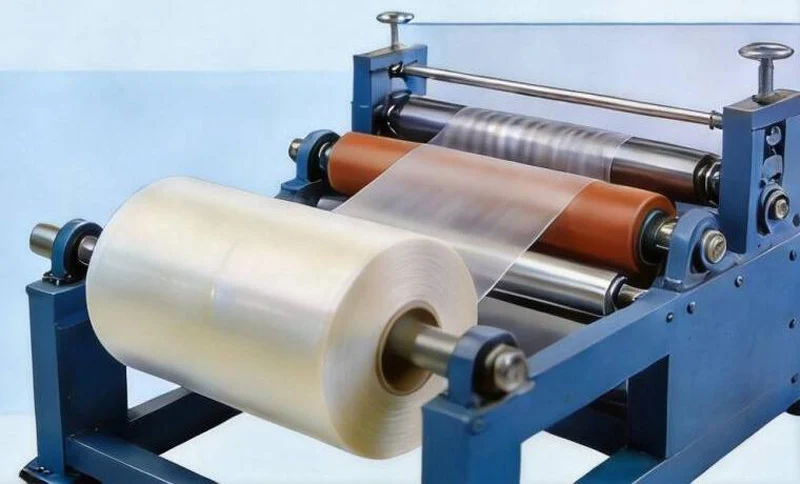
After cooling and setting, the bubble passes through the collapsing frame (A-frame) and is gradually flattened into a double-layer film. Traction rollers pull the film at a constant linear speed of 20–50 m/min. The flattened film is fed into the winding unit, where winding tension is controlled at 10–15 N to produce a neat, finished film roll.
Shutdown and Routine Maintenance
Upon completion of production, close the hopper slide gate, purge remaining material from the barrel, and sequentially shut down components such as the screw, haul-off unit, and blowers. Use copper tools to clean residual material from the die lip, clean the screw every 500 hours of operation, and regularly replace the gearbox lubricant. Once all components have stopped moving, turn off the main power supply and clear away production waste from the surrounding area.
Conclusion
Overall, the blown film machine is a vital piece of equipment for producing high-quality blown film. Blown film extruders can produce films with diverse properties—such as barrier performance, strength, and visual appearance—making them widely applicable in sectors like food packaging, medical packaging, agricultural films, and construction films.
Given the wide variety of blown film machines available, selecting the right equipment can be challenging. For guidance on choosing a high-quality machine, you can refer to the article “What Are the Characteristics of a High-Quality Blown Film Machine?” or contact us directly; Xinye is always at your service.