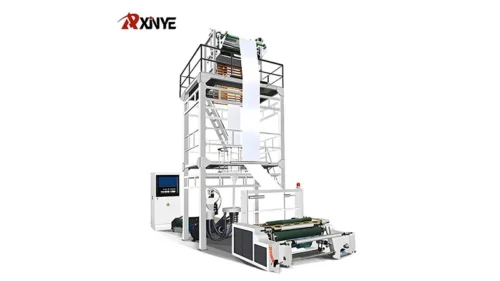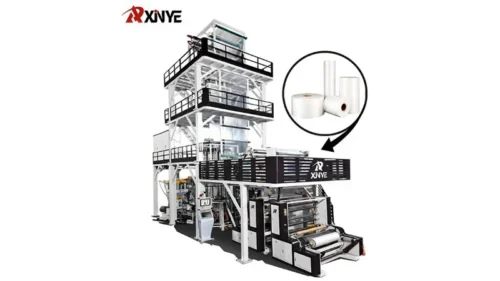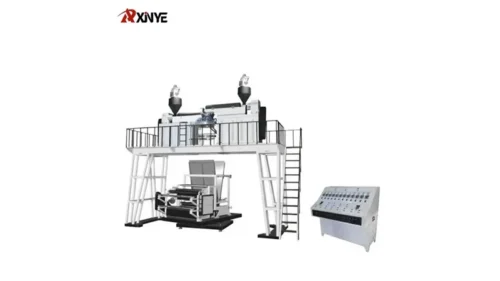
When it comes to plastic film production, the blown film machine is indispensable. It plays a vital role in sectors ranging from food packaging and agricultural mulch films to industrial films. However, the market is flooded with machines of varying quality, making it difficult to distinguish the superior ones. Consequently, determining the quality of a blown film machine has become a key focus for purchasers and production managers.
In reality, simply looking at the exterior and technical specifications is insufficient when seeking a truly high-quality machine; understanding the core technology is fundamental. Yet, with the wide array of technologies touted by manufacturers, which ones are truly critical? Let’s take a closer look.
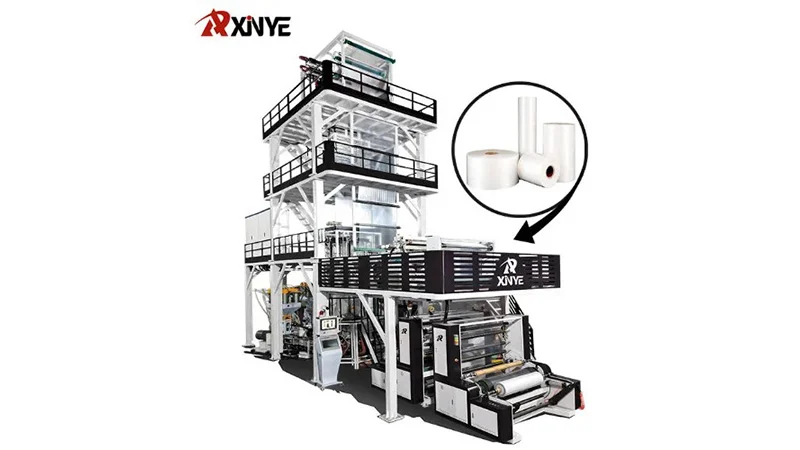
I. Precise Thickness Control
A core indicator of product quality is the uniformity of the film’s thickness. No matter how excellent the film’s other properties are, uneven thickness renders it useless. Therefore, a high-quality blown film machine must be equipped with a precision thickness control system. Such systems typically combine an online thickness gauge with an automatic air ring adjustment mechanism.
The online thickness gauge monitors the film’s thickness distribution in both the transverse and machine directions in real-time, achieving a detection accuracy of ±1 micron. Crucially, when thickness deviations are detected, the system automatically adjusts the airflow in specific zones of the air ring to provide localized cooling and correction to the film bubble, thereby establishing a closed-loop control process.
II. IBC (Internal Bubble Cooling) System
Achieving uniform film thickness and width requires stable film bubble dynamics. The IBC (Internal Bubble Cooling) system introduces a controlled cooling airflow into the interior of the film bubble. By combining this with the external air ring, it creates a “dual-cooling” (internal and external) configuration that offers multiple advantages. The system’s core strength lies in its precise airflow control and closed-loop monitoring of the bubble diameter, ensuring uniform cooling without compromising the bubble’s structural integrity.
| Contrast | Without IBC System | With IBC System |
| Cooling Efficiency | Lower | Increased by over 50% |
| Production Speed | Limited | Can be increased by 30%–50% |
| Bubble Stability | Prone to swaying | Stable operation |
| Film Transparency | Average | Superior |
| Energy Consumption | Relatively high | Lower overall energy consumption |
III. Intelligent Winding Control
The intelligent winding system controls the flatness of the roll end face to within ±1mm, ensuring no indentations on the core and no wrinkles on the outer layers, thereby significantly enhancing the product’s market competitiveness. Key features include:
- Automatic tension control: Real-time adjustment of winding tension based on roll diameter changes to prevent film stretching, deformation, or wrinkling due to looseness;
- Contact pressure regulation: Coordinated control of the air shaft and nip roller ensures consistent tightness from the core to the outer layers;
- Automatic roll change and film cutting: Enables automatic roll changes without stopping the machine, reducing splices and improving continuity;
- Roll diameter and length monitoring: Precise recording of each roll’s length and weight, facilitating inventory management and quality traceability.
IV. Multilayer Co-extrusion Technology
As technology advances, market demands for film are rising. Films must offer excellent barrier properties and high strength, alongside good heat-sealing capabilities and transparency. Single-material films can no longer meet these needs, but multilayer co-extrusion technology offers the perfect solution.
High-quality blown film machines typically support co-extrusion structures of 3 to 7 layers (or more). They utilize multiple extruders to simultaneously plasticize resins with different functions—such as PE, PA, EVOH, and adhesive layers—and combine them into a single composite structure within the die head, thereby enhancing the film’s performance. Multilayer co-extrusion technology not only expands the functional capabilities of the film but also marks a significant benchmark for technological advancement in blown film machinery.
V. Low-Energy Design
Amidst rising energy costs and the global push for “dual carbon” goals (carbon peaking and carbon neutrality), low energy consumption has become a hallmark of high-quality blown film machines. Energy-efficient models can reduce unit energy consumption by 15%–30% compared to traditional machines, delivering significant economic benefits over long-term operation.
Since 1995, Ruian Xinye Packaging Machinery Co., Ltd. has dedicated itself to the R&D and manufacturing of polyethylene film extruders, bubble film extruders, and related bag-making machines, accumulating extensive industry experience. We also provide comprehensive, one-stop services for global clients, including the selection and supply of auxiliary equipment.