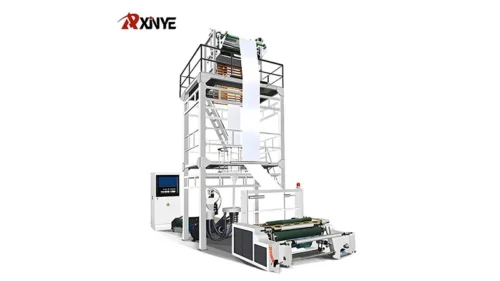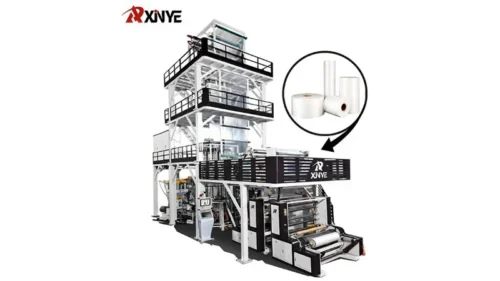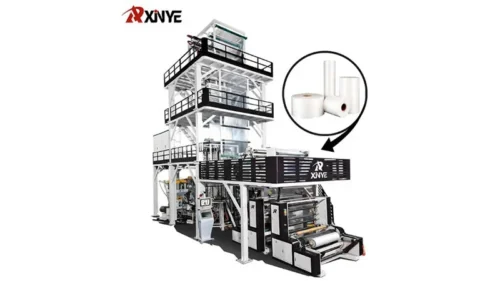
A film blowing machine is specialized processing equipment that heats and melts plastic pellets, then uses compressed air to inflate and form them into plastic film; it is widely used in sectors such as packaging, agriculture, and pharmaceuticals.
As the core equipment in plastic film production, the operating efficiency of the film blowing machine directly determines production capacity, product quality (yield rate), and production costs. Improving production efficiency is a key concern for industry professionals. Users can enhance efficiency by focusing on areas such as monitoring core parameters, performing routine maintenance, and anticipating potential faults.
Monitoring Core Parameters
Daily operations involve producing various products using different raw materials. This necessitates precise parameter control to ensure stable output. Temperature settings should be maintained at 150–170°C for the feeding section and 180–210°C for the plasticizing section. The blow-up ratio and haul-off ratio must align with product thickness requirements, typically maintained within the 2.5:1 to 3:1 range. Precise control of these parameters is essential for ensuring product quality.
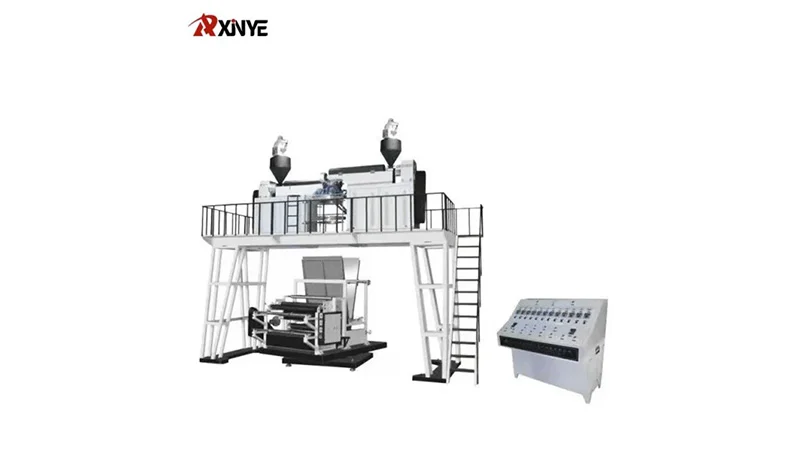
XINYE’s dual-layer PPE/PP downward-blowing, water-cooled film blowing machine features a dual-extruder and dual-layer die head design. Its primary advantage lies in this dual-extruder and dual-layer die structure, which allows for the use of raw materials with distinct properties in each layer. The resulting (PP+PE) film combines the wear resistance, transparency, and dimensional stability of PP with the excellent heat-sealing properties of PE.
Routine Maintenance
Routine maintenance is a prerequisite for extending the machine’s service life and a foundation for improving efficiency. Before operation, inspect the machine’s components: periodically apply high-temperature lubricant to gearboxes and bearings, and clear any accumulated residue from the die head gap. Maintenance should not be neglected after shutdown either; promptly clear residual material from the feed hopper to prevent buildup.
If time permits, inspect the surface flatness of the haul-off and winding rollers weekly. Promptly remove any adhered film fragments to prevent winding misalignment or film wrinkling caused by surface irregularities.
Fault Prediction
Predicting faults is crucial for minimizing losses associated with downtime. Three key indicators warrant close monitoring: fluctuations in main motor current, bubble stability, and abnormal noises from the drive assembly.
Main motor current fluctuations: If the current fluctuates by more than 10% within a short period, it likely indicates uneven feeding or abnormal die pressure; the feeding system and die output must be inspected immediately.
Bubble stability: If the bubble exhibits irregular swaying, first check for uneven airflow velocity at the air ring and inspect heating bands for localized temperature failure.
Abnormal noises in the drive assembly: If unusual noise arises from the gearbox or bearing areas, shut down the machine immediately to inspect components for wear, thereby preventing extended downtime caused by escalating mechanical failure.